
Mumbai offers one of India’s most unique wildlife experiences — the opportunity to witness thousands of migratory flamingos thriving within an urban ecosystem. The Flamingo Boat Safari at the Thane Creek Flamingo Sanctuary has emerged as one of the most significant nature-based experiences in the city, attracting birdwatchers, wildlife photographers, students, researchers, and corporate groups alike.
Located between Mumbai and Navi Mumbai, this vast coastal wetland ecosystem represents a rare example of biodiversity flourishing alongside rapid urban development. Every winter, large congregations of flamingos transform the creek into a spectacular pink landscape, making it one of the most sought-after wildlife experiences in Maharashtra.
One of the most frequently asked questions while planning a visit is: What is the best time to choose a Flamingo Boat Safari?
Understanding flamingo ecology, wetland bird behavior, and tidal movement within Thane Creek plays a crucial role in answering this question.
Understanding Why Do Flamingos Come to Thane Creek
Every year, thousands of flamingos arrive along Mumbai’s eastern coastline, transforming Thane Creek into one of India’s most remarkable urban wildlife spectacles. Their seasonal arrival is closely linked to the availability of abundant food resources, making the creek an ideal feeding habitat during the migration period. The Thane Creek Flamingo Sanctuary provides ecological conditions that support large congregations of these migratory birds throughout the winter months.
Thane Creek is a vast coastal wetland ecosystem made up of mangrove forests, intertidal mudflats, shallow lagoons, and tidal channels connected to the Arabian Sea. Recognized under the Ramsar Convention on Wetlands as a wetland of international importance, the creek supports rich biodiversity and plays a crucial role in sustaining migratory bird populations. Continuous tidal movement brings nutrient-rich sediments into the creek, creating highly productive feeding habitats that remain active throughout the day.
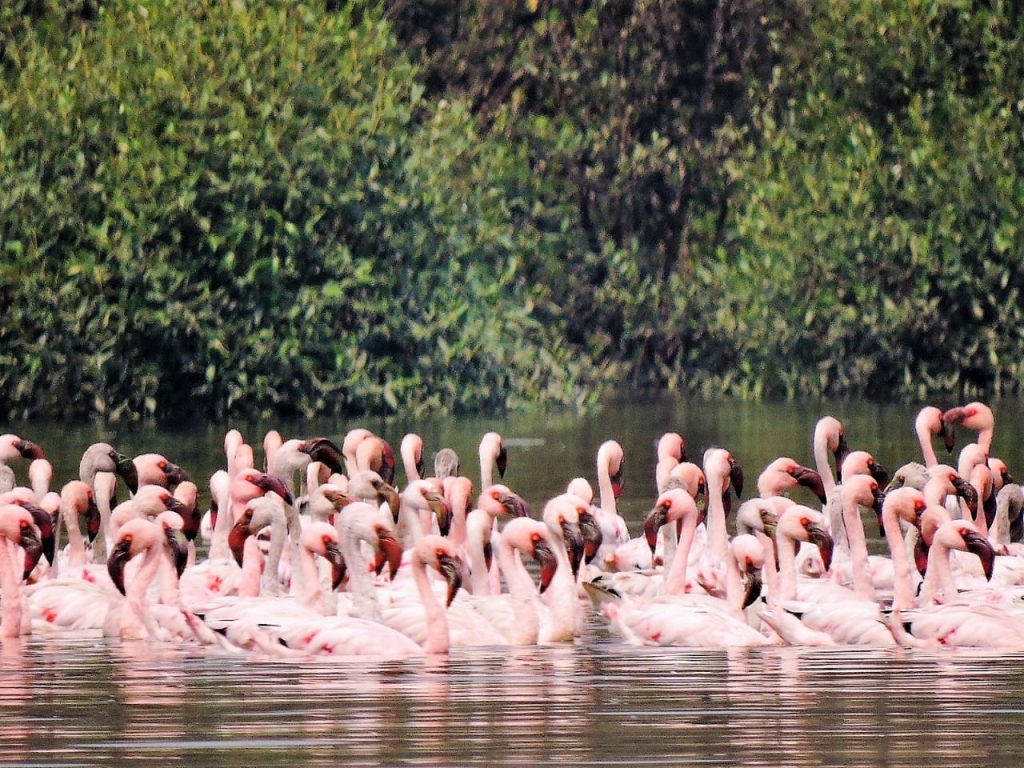
These tidal processes encourage the rapid growth of algae, plankton, and microscopic organisms within shallow waters and exposed mudflats — the primary food source for both Greater and Lesser Flamingos. Attracted by this abundance, flamingos migrate from regions such as Gujarat, Iran, and Central Asia to feed efficiently in Thane Creek. During low tide, when mudflats become visible, visitors can observe large flocks feeding together, sweeping their specialized beaks through shallow water to filter algae and tiny organisms, demonstrating how the rich productivity of Thane Creek sustains their annual migration to Mumbai.
Understanding Flamingo Behaviour in Coastal Ecosystems
Unlike forest safaris where wildlife sightings depend largely on temperature or daylight activity patterns, flamingos and other wader birds inhabit shallow coastal wetlands and feeding zones that remain biologically active across daylight hours.
Flamingos are specialised filter feeders. Their uniquely curved beaks allow them to filter algae, diatoms, plankton, tiny crustaceans, and microscopic organisms from shallow water and mud. These food sources remain continuously available within nutrient-rich creek waters and exposed mudflats.
Because feeding depends primarily on water depth rather than sunlight, flamingos remain active throughout the day. Visitors therefore experience consistent sightings during morning, afternoon, or evening safaris when tidal conditions are favourable.
The Most Important Factor: Tide Timing
The single most important factor influencing flamingo sightings during a Mumbai Flamingo Boat Safari is tide timing. Thane Creek is a tidal ecosystem directly influenced by sea movement, and water levels change multiple times daily, directly affecting bird distribution and feeding behaviour.
• Low Tide: During low tide, water levels recede and vast mudflats become exposed across the creek. These mudflats contain nutrient-rich sediments filled with algae and microscopic organisms, attracting large congregations of flamingos and other shorebirds that gather actively for feeding. Visitors often witness dense feeding flocks spread across wide areas while flamingos forage in shallow waters.
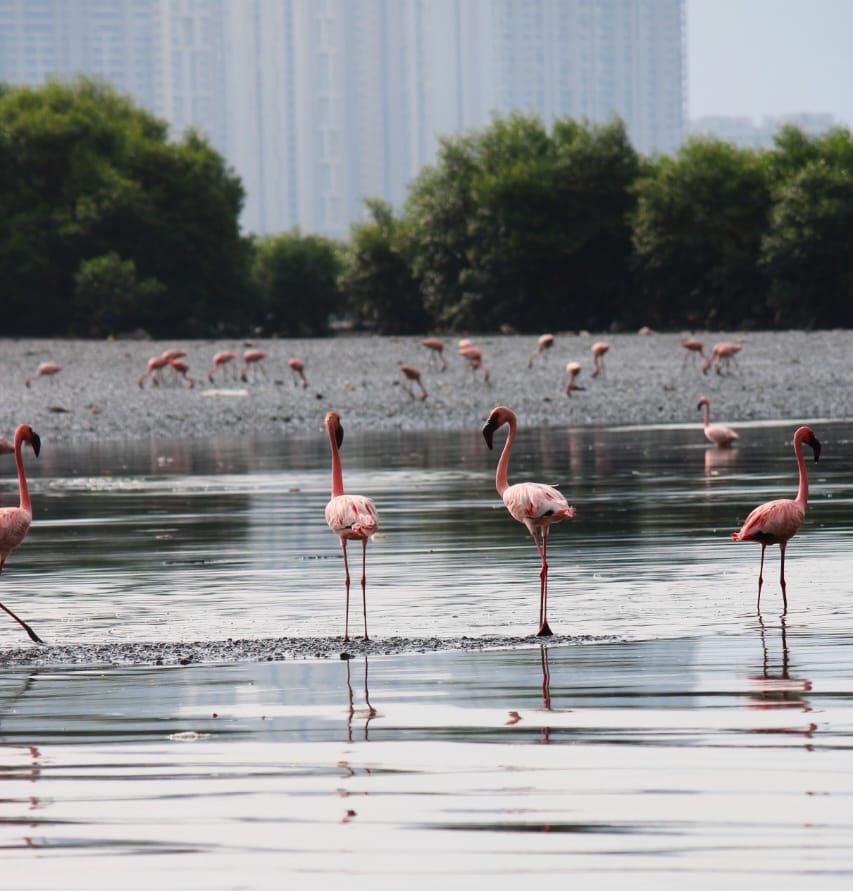
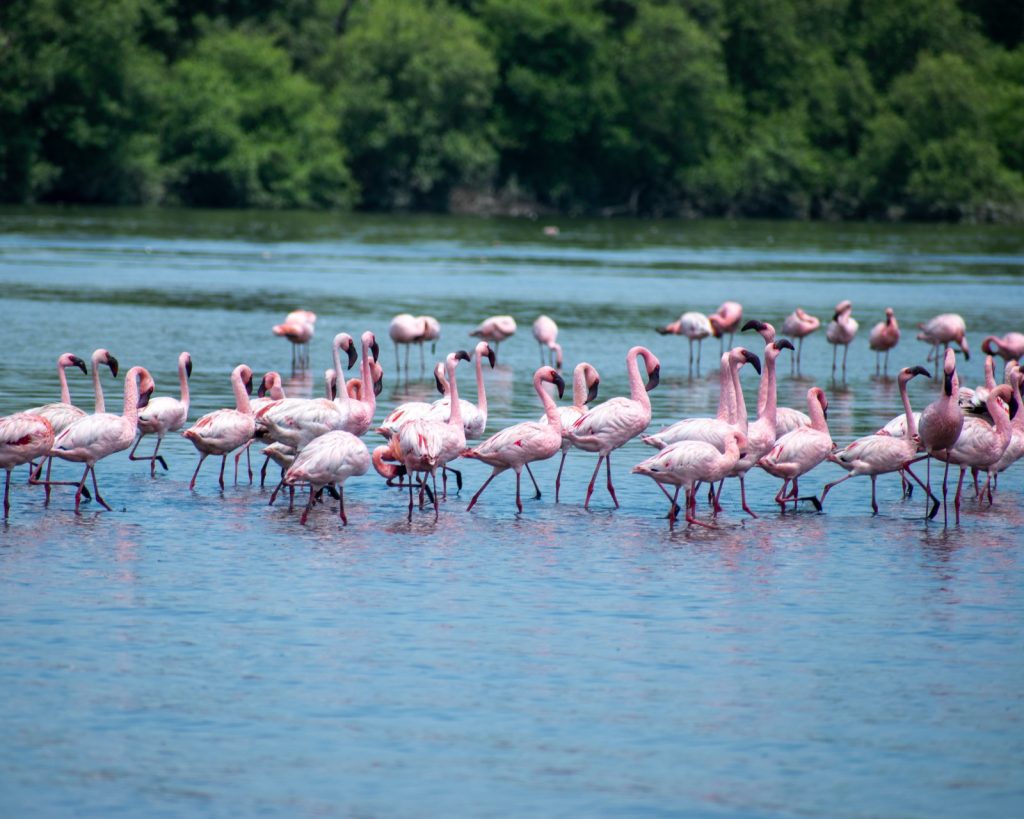
• Rising Tide: As water levels gradually increase, feeding areas begin to shrink and birds move toward shallow accessible channels. This natural concentration brings flamingos closer together, often allowing clearer and closer sightings from safari boats, making this phase ideal for observation and photography.
Because flamingos continuously adjust their movement according to changing water depth, safaris aligned with low or rising tide conditions consistently provide the most rewarding wildlife viewing experience.
Why Boat Safari Timings Change Daily
Flamingo Boat Safari schedules vary daily because they are planned according to tidal charts rather than fixed tourism timings. Boat navigation within mangrove creeks depends on safe water depth as well as bird congregation zones.
Operators therefore align departures with ecological conditions instead of standard morning or evening slots. Choosing a safari based only on preferred timing may reduce sighting opportunities, whereas selecting one aligned with favourable tide movement significantly enhances the experience.
Wetland Birds of Thane Creek — Sightings Throughout the Day
A common misconception among visitors is that bird activity reduces after morning hours. In coastal wetlands, bird activity remains stable throughout the day because feeding opportunities depend on water levels rather than temperature.
Wetland birds spend most of their time feeding, resting near water edges, preening feathers, or moving gradually with tidal shifts. Since suitable feeding conditions occur across daylight hours, sightings remain consistent during most safari timings.
Visitors commonly observe sandpipers, plovers, avocets, herons, egrets, gulls, terns, stilts, and curlews alongside flamingos. It is not uncommon to record more than thirty bird species during a single excursion, making the safari valuable for both serious birders and first-time nature enthusiasts.
Best Time of Day for Flamingo Sightings
Flamingos and other waders remain close to water bodies throughout the day, and sightings are not significantly influenced by daytime heat or light intensity. Unlike forest habitats where wildlife avoids mid-day activity, coastal wetland ecosystems remain active because feeding behaviour depends primarily on water availability.
Morning and evening safaris are often preferred by visitors due to comparatively cooler temperatures and more comfortable climatic conditions, especially during Mumbai’s warmer months. However, while these time slots may offer a more pleasant outdoor experience, the quality of flamingo sightings ultimately depends on aligning the safari with favourable tidal conditions. Regardless of whether the safari takes place in the morning, afternoon, or evening, tide movement remains the most important factor influencing bird activity and visibility.
Best Months to Visit Flamingos in Mumbai
The most rewarding period to witness flamingos in Thane Creek is from the end of February to the end of April. During this phase of migration season, flamingos are observed in larger feeding groups and display deeper pink coloration due to sustained feeding on carotenoid-rich algae and crustaceans present within the creek ecosystem.
This period offers excellent visibility of both Greater and Lesser Flamingos along with high concentrations of migratory shorebirds across exposed mudflats.
Photography Opportunities During Flamingo Boat Safari
Flamingo Boat Safaris provide exceptional opportunities for wildlife photography due to open landscapes, large flock formations, reflective water surfaces, and observable feeding behaviour. Rising tide phases often bring birds closer to boats, enabling detailed viewing without disturbance.
Soft lighting during early morning and late afternoon enhances photographic outcomes, though sightings remain dependable throughout the day when tides are favourable.
Final Consideration: Season and Tide Over Clock Timing
In coastal ecosystems such as Mumbai, successful wildlife viewing depends more on ecological understanding than fixed schedules. Selecting the right migration season and aligning the safari with low or rising tide conditions ensures the highest probability of witnessing Mumbai’s iconic flamingo congregations in their natural habitat.
Careful planning based on tide movement and migration season ultimately defines the quality of a Flamingo Boat Safari experience. For a hassle free rich boat safari experience in Thane Creek, call or WhatsApp us on +91-9987282746
Conclusion
Choosing the best Flamingo Boat Safari in Mumbai is less about selecting a specific hour and more about understanding nature’s rhythm. Thane Creek’s Ramsar-recognized wetland ecosystem functions according to tidal cycles that influence bird movement, feeding behavior, and visibility.
Flamingos migrate here in response to abundant food resources, and their spectacular congregations can be reliably observed when safaris are planned around favorable ecological conditions. By prioritizing seasonality, tide timing, and wetland ecology, visitors experience not just bird sightings but a deeper connection with one of Mumbai’s most remarkable natural landscapes.
Explore more: Flamingo Boat Safari near Mumbai, Spectacular Flamingo Courtship Dance in Mumbai, Flamingo Safari – a Participant’s Perspective