
Birds have always been surrounded by myths, cultural beliefs, and misconceptions. While many of these ideas have been passed down for generations, science and observation tell a very different story. Understanding the truth behind these myths helps us appreciate birds not just as symbols or superstitions, but as intelligent and ecologically important species.
If You Touch Baby Birds, Their Parents Will Abandon Them
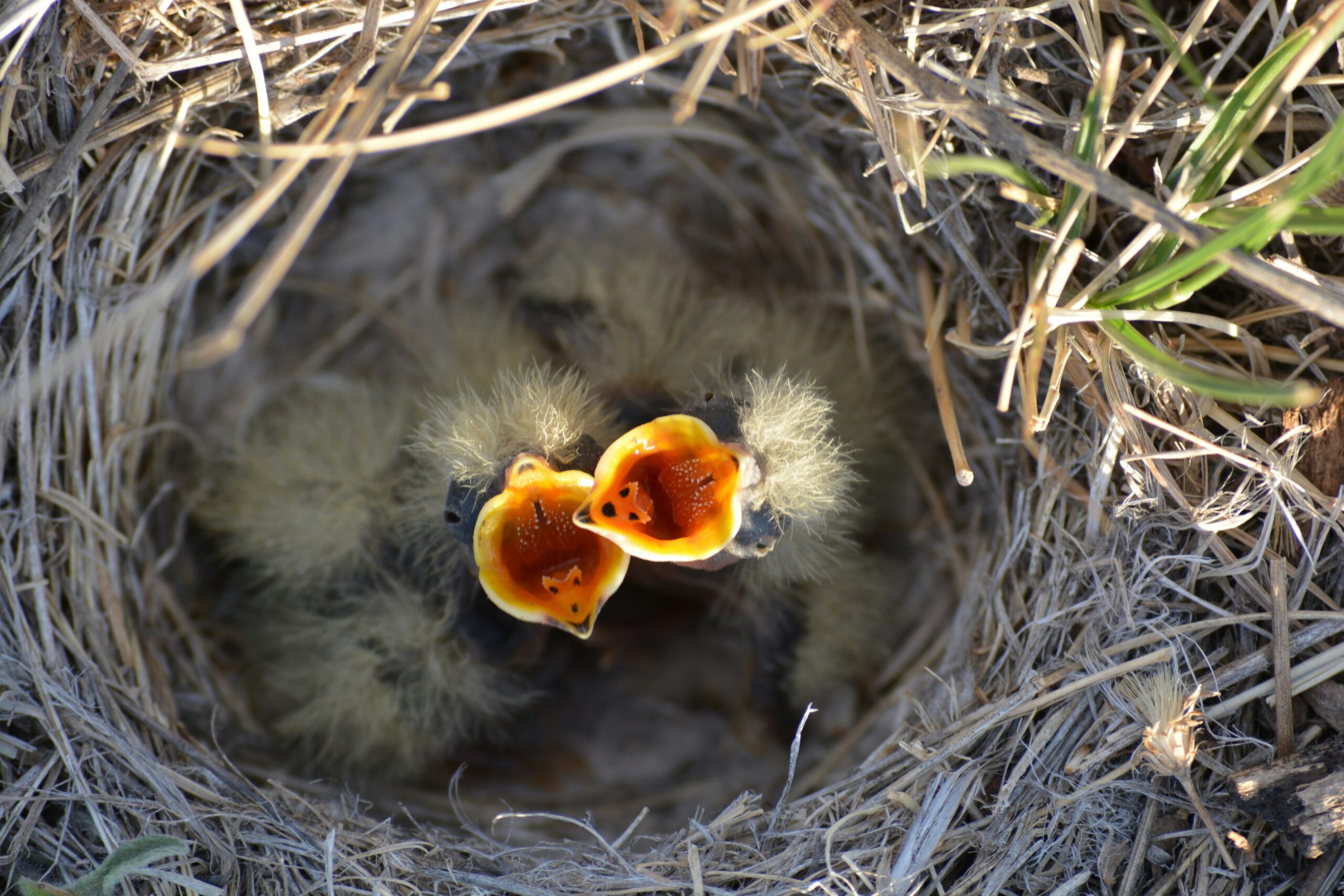
A widely believed myth suggests that parent birds abandon chicks if humans touch them due to scent transfer. This is not true. Most birds have a very limited sense of smell and rely primarily on sight and sound to identify their young.
Birds regularly raise chicks even in areas with constant human presence. Parents continue feeding and protecting their offspring regardless of brief human contact, making this belief scientifically incorrect.
Birds Are Always Monogamous and Two Parents Are Needed to Raise Young
Another misconception is that birds always form lifelong pairs and require both parents to raise chicks. While some species do show strong pair bonding, many birds follow entirely different parenting strategies.
In species such as hummingbirds and woodcocks, females independently build nests, incubate eggs, and raise chicks alone. On the other hand, highly social birds like crows and blue jays often recruit helpers — usually older offspring — who assist in feeding and protecting younger birds. Bird parenting is far more diverse than commonly believed.
Ostriches Bury Their Heads in the Sand
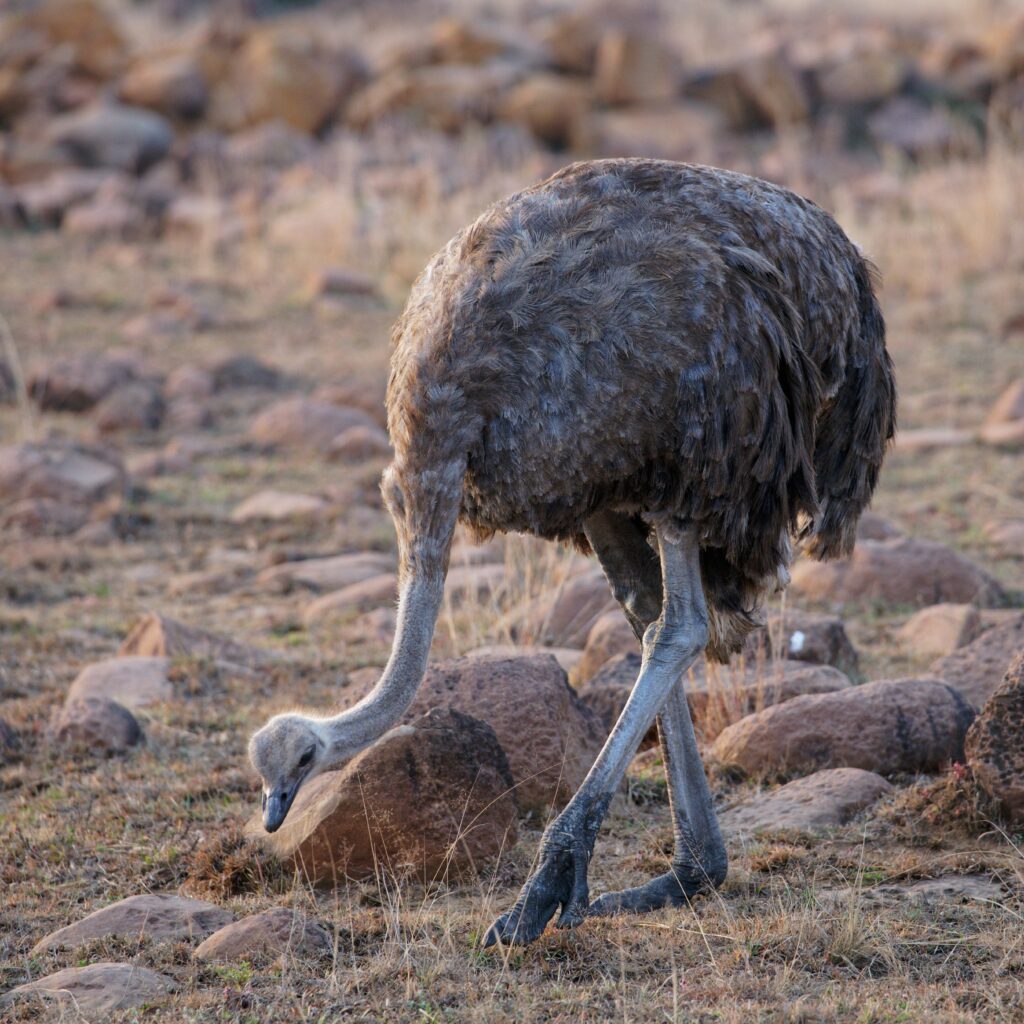
The belief that the Common Ostrich hides its head in sand out of fear is entirely false. Ostriches lower their heads mainly to rotate eggs during nesting or to stay low when sensing danger.
From a distance, this behavior creates the illusion that their heads are buried, giving rise to one of the most persistent wildlife myths.
Vultures Are Dirty and Dangerous Birds
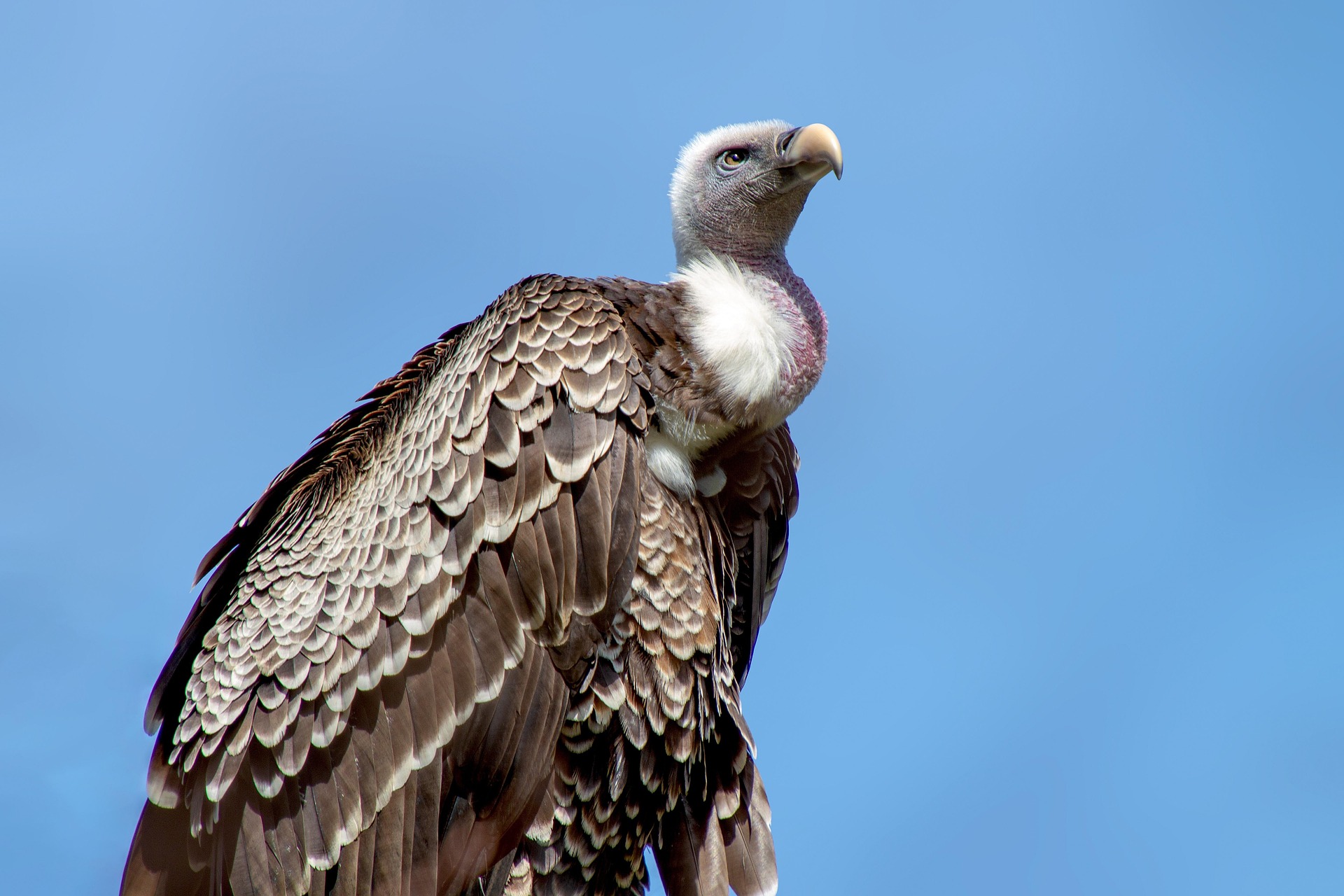
Vultures are often misunderstood as filthy or harmful creatures. In reality, species such as the Indian Vulture perform one of nature’s most essential cleaning roles.
Their extremely acidic digestive systems destroy dangerous bacteria and pathogens present in carcasses, preventing disease outbreaks in ecosystems. Rather than being dangerous, vultures act as natural sanitation workers maintaining ecological balance.
You Have a Bird’s Brain
People often mock others by saying they have a “bird’s brain,” assuming birds are unintelligent. In reality, birds are far from stupid. Though their brains are smaller than humans, they use them remarkably efficiently.
Birds can migrate thousands of kilometers without navigation devices, recognize relatives even after long separations, and identify calls of other species. Some birds, especially crows, are known to use tools, solve problems, and remember human faces. The phrase meant to insult intelligence is therefore one of the biggest myths about birds.
Crows Are Bad Omens and the Pied Cuckoo (Chatak) Brings Luck
Across cultures, crows are frequently associated with negativity or bad omens. However, the House Crow is among the most intelligent bird species known.
Crows demonstrate advanced problem-solving skills, tool usage, strong memory, and complex social behavior. Their success in urban environments reflects adaptability and intelligence — not misfortune.
Similarly, the Pied Cuckoo, popularly known as the Chatak in Indian folklore, is often believed to bring luck or rainfall. While its arrival does coincide with the monsoon due to migration patterns, it does not control weather. The association emerged simply because people noticed its seasonal appearance before rains.

Penguins Live Only in Extreme Cold
Many assume all penguins live exclusively in Antarctica. While species like the Emperor Penguin inhabit polar regions, several penguin species thrive in temperate and even tropical climates across South America, Africa, and Australia.
Penguins are adapted for aquatic life rather than cold weather alone.

CONCLUSION
Many bird myths have originated from fascinating folklore, imagination, and early human attempts to explain nature. Some of these beliefs are actually quite funny and have served as wonderful tools for storytelling across cultures, adding mystery and charm to our relationship with birds. Tales of lucky birds, bad omens, or strange behaviors made nature more relatable and memorable for people in the past.
However, while these myths enrich stories and traditions, believing them as facts holds little scientific foundation. Birds function through instinct, adaptation, and ecological balance rather than superstition. Appreciating these myths as cultural stories — rather than reality — allows us to enjoy their charm while also understanding and respecting birds through knowledge, observation, and science.
Birdwatching helps replace common myths with real-world observation. To truly understand birds and their behaviour, it is essential to observe species in their natural habitats, where their feeding patterns, communication, migration, and ecological roles can be experienced firsthand. To carefully observe and discover the real stories that shape the lives of birds in the wild, join us for such immersive birdwatching trips.
Enjoyed reading? Discover more: 10 Birds Every Beginner Birder Should Learn to Identify in India, Beginner’s Guide to Birdwatching, Best Birdwatching Destinations in India, First Bird Walk Experience: What You’ll Notice and Learn