
Birdwatching is one of the most rewarding ways to explore nature. India is home to more than 1,300 bird species, making it one of the richest birding destinations in the world. For beginners, this incredible diversity can sometimes feel overwhelming. However, the best way to start birdwatching is by learning to identify a few common and easily recognisable species.
Many birds in India are widespread, active, and easy to observe in forests, wetlands, parks, and even urban areas. Learning to identify these species helps beginners build confidence and develop observation skills that make birdwatching even more enjoyable.
Here are 10 birds every beginner birder should learn to identify in India, along with the key features that make them easy to recognise.
Indian Paradise Flycatcher
The Indian Paradise Flycatcher is one of the most elegant birds found in Indian forests. The male bird is famous for its long, flowing white tail that trails behind it during flight, while females are usually rufous with shorter tails.
This species is often seen in forest clearings and woodland edges, where it flies gracefully between branches while catching insects in the air.
Key identification features include:
➤ Long ribbon-like tail in adult males
➤ Glossy black head with a crest
➤ Graceful aerial hunting behaviour
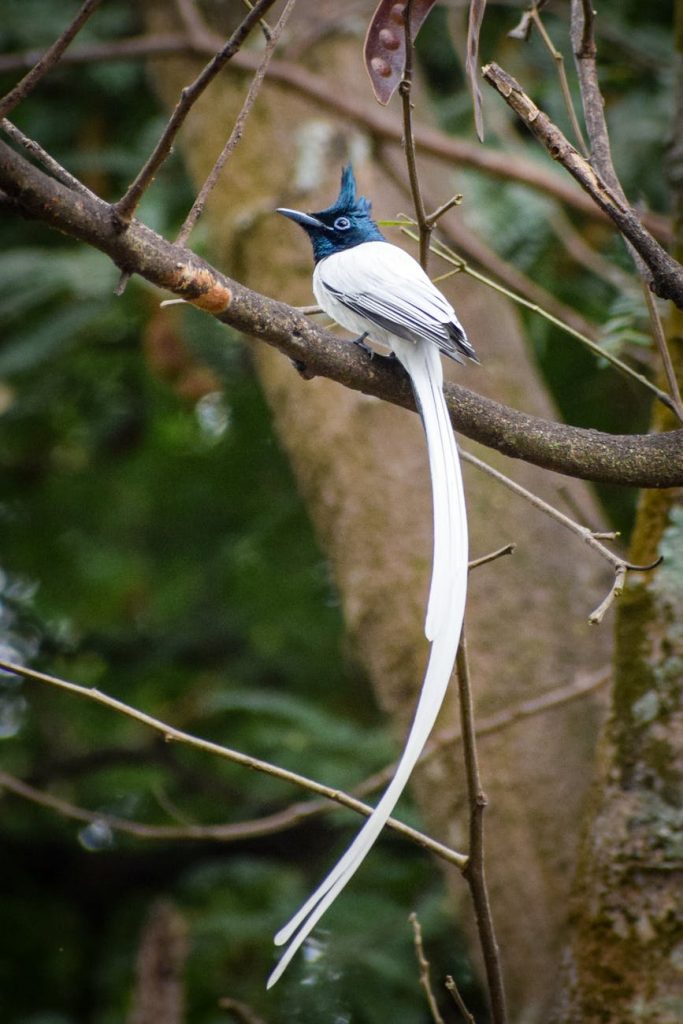
Beginners often spot this species during forest walks in habitats such as Sanjay Gandhi National Park.
The Red-vented Bulbul is one of the most common birds in India and is frequently seen in gardens, parks, and forest edges. Its confident behaviour and distinctive appearance make it easy for beginners to identify.
Key features include:
➤ Black crest on the head
➤ Dark brown body with a scaled pattern
➤ Bright red patch beneath the tail
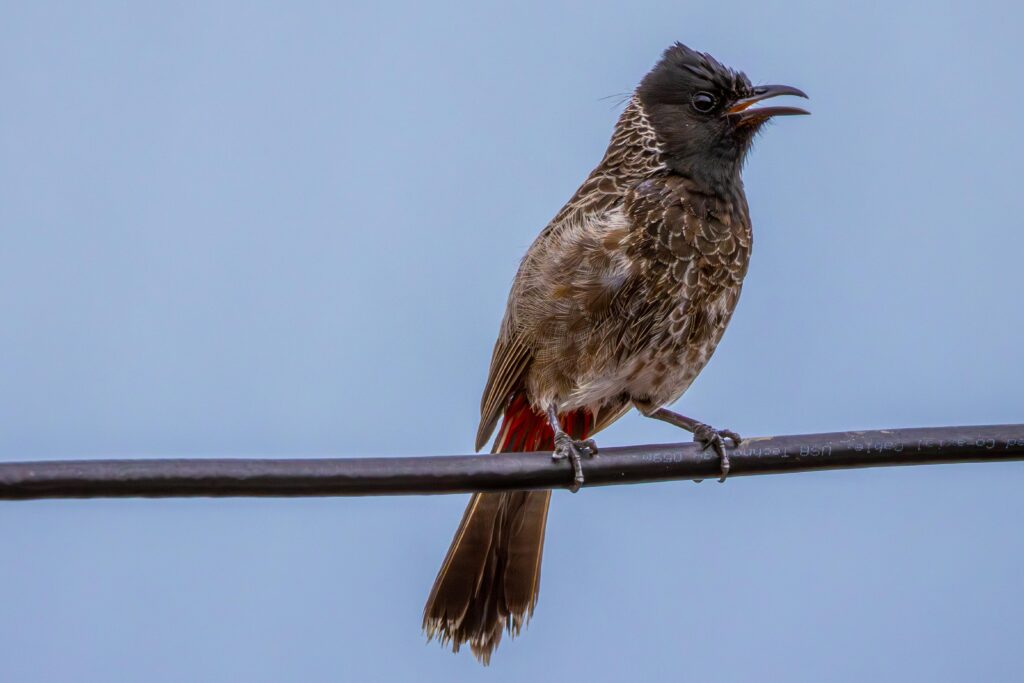
Bulbuls are highly adaptable birds and can often be heard calling loudly from treetops.
The Black Drongo is a striking all-black bird commonly seen perched on wires, fences, or exposed branches. Despite its small size, it is known for its fearless behaviour and often chases away larger birds such as kites and crows.
Key identification features include:
➤ Glossy black plumage
➤ Deeply forked tail
➤ Aggressive aerial chases of other birds
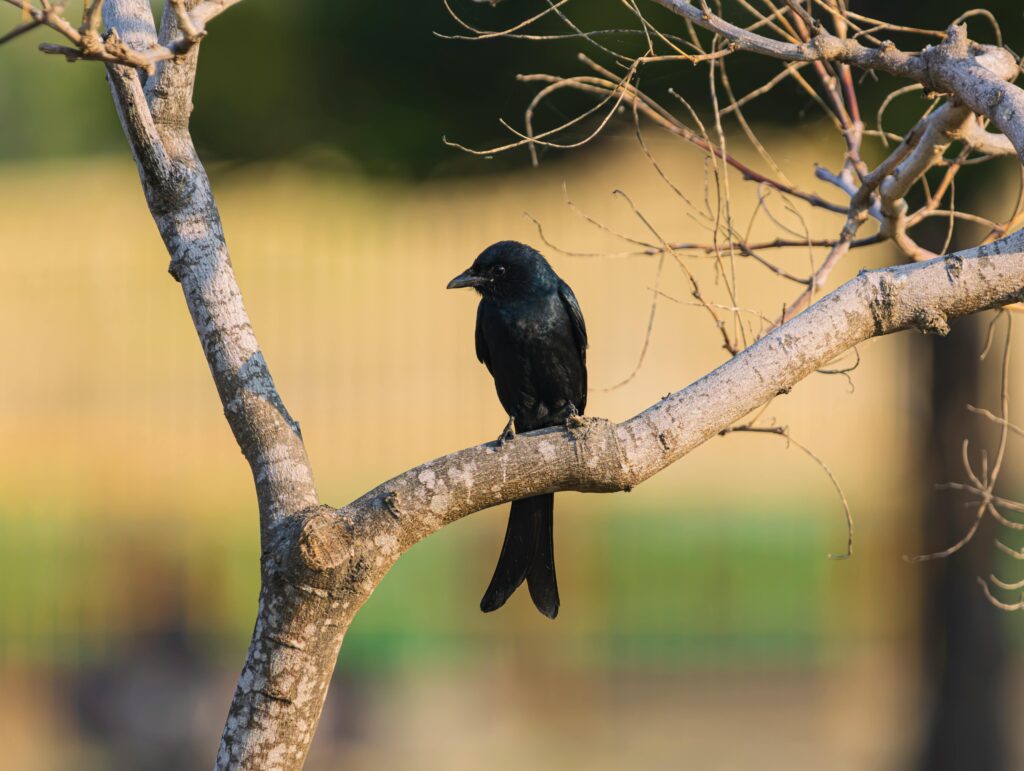
Drongos are frequently observed in open landscapes and agricultural fields across India.
The White-throated Kingfisher is one of the most colourful birds in India and can be seen near wetlands, lakes, and urban water bodies.
Its bright colours make it very easy for beginners to identify.
Key features include:
➤ Bright turquoise blue wings and back
➤ Rich chestnut brown head and body
➤ Bright white throat patch
➤ Large red bill
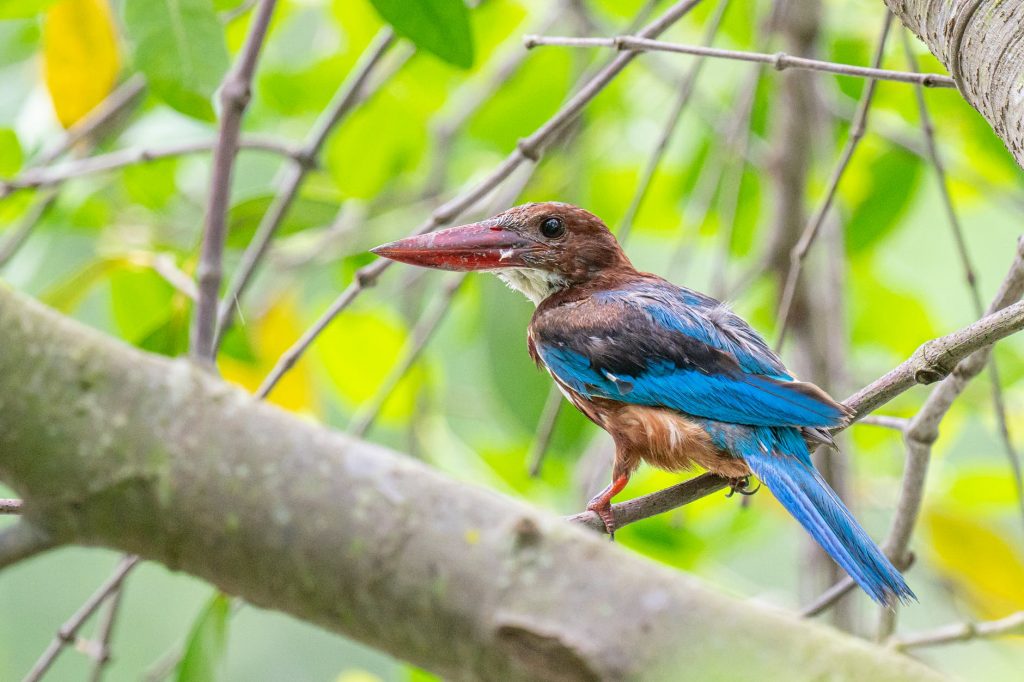
Despite its name, this kingfisher often hunts insects, lizards, and small frogs in addition to fish.
The Indian Peafowl, also known as the peacock, is India’s national bird and one of the most recognisable species in the country.
This large bird is commonly seen in forest edges, farmland, and protected areas such as Ranthambore National Park.
Key identification features include:
➤ Brilliant blue neck and head
➤ Long decorative tail feathers in males
➤ Loud and distinctive calls
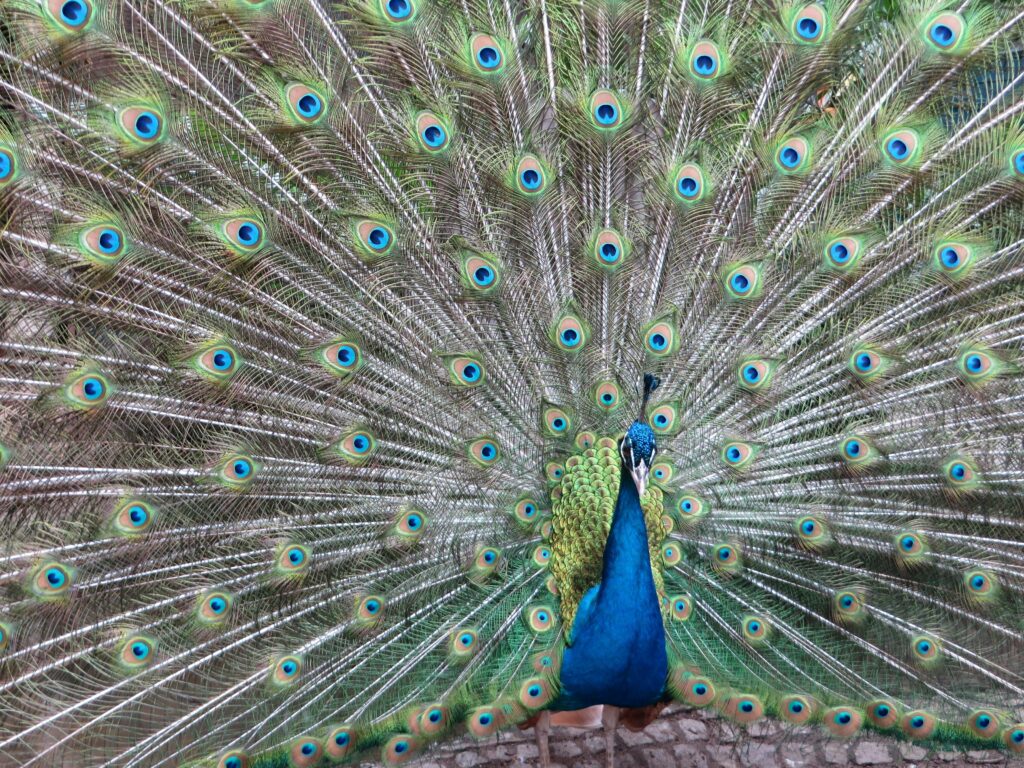
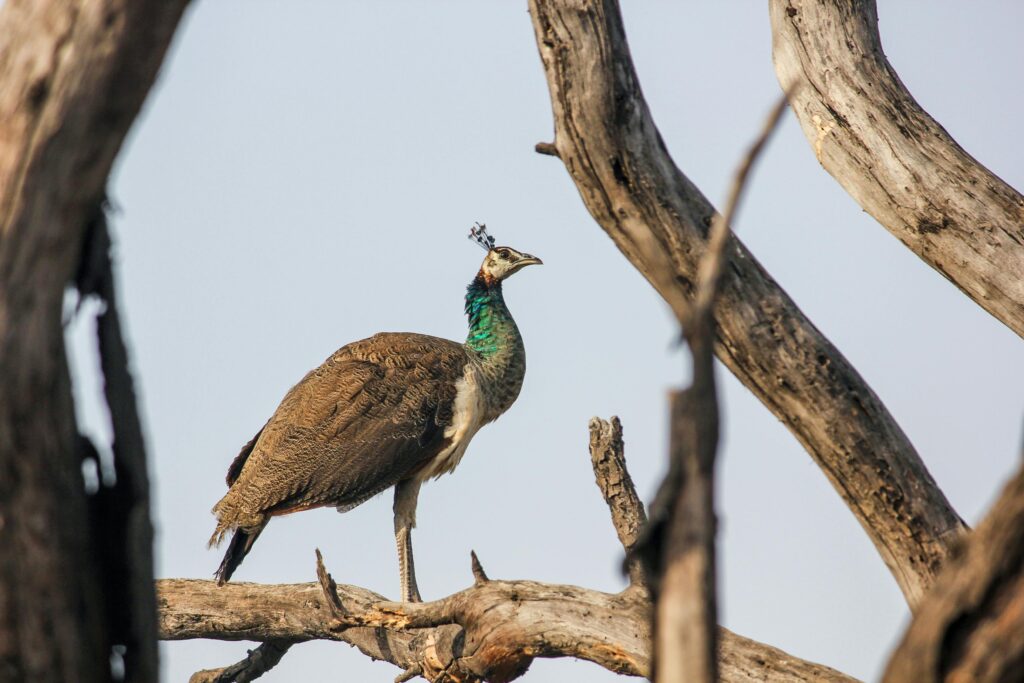
Peafowl are often active during early mornings and late afternoons.
The Coppersmith Barbet is famous for its distinctive call that resembles the rhythmic tapping of a hammer on metal.
Despite its small size, this bird can be surprisingly easy to locate once you recognise its call.
Key features include:
➤ Green body blending with foliage
➤ Bright red forehead and throat
➤ Repetitive metallic “tuk-tuk” call
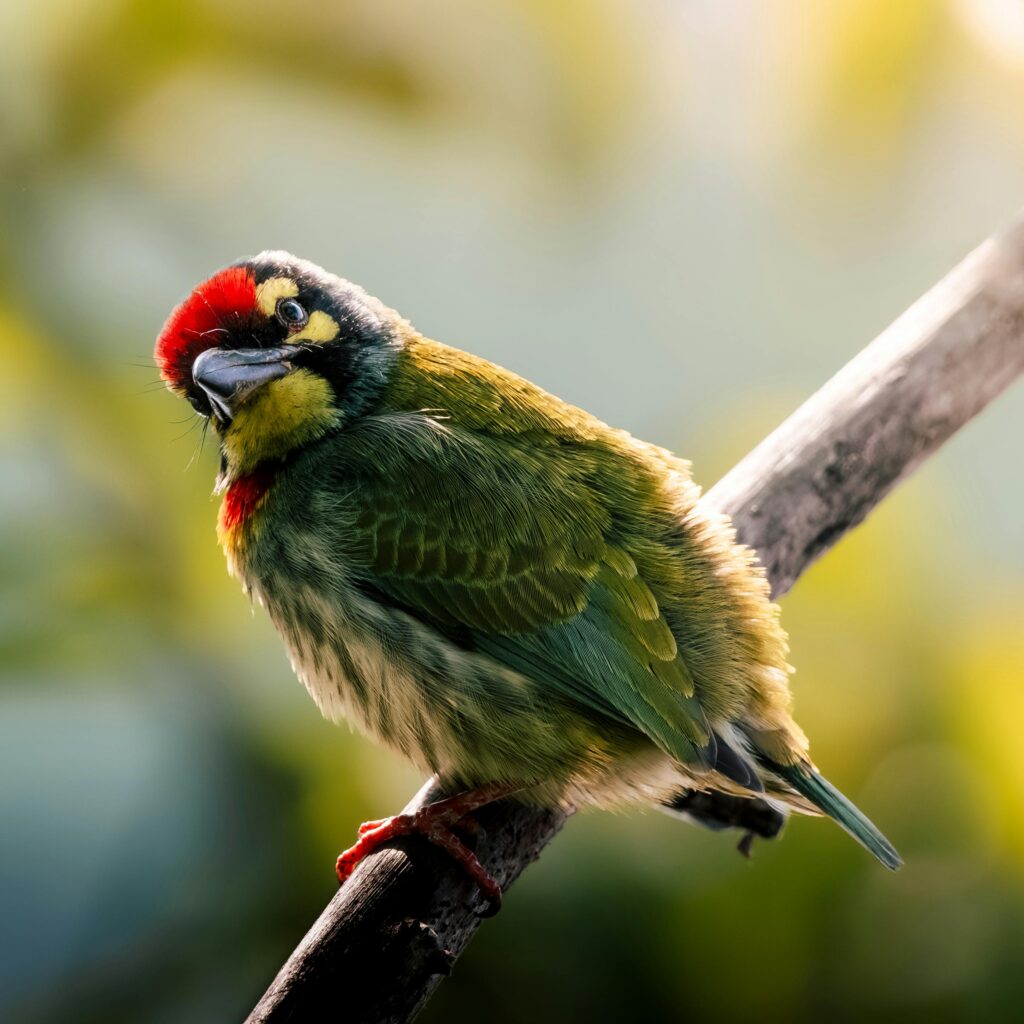
These birds are often seen perched quietly on fruiting trees.
The Rose-ringed Parakeet is one of the most familiar parrots in India and is often seen flying in noisy flocks across cities and forests.
Key identification features include:
➤ Bright green body
➤ Long pointed tail
➤ Red bill
➤ Rose-coloured neck ring in adult males
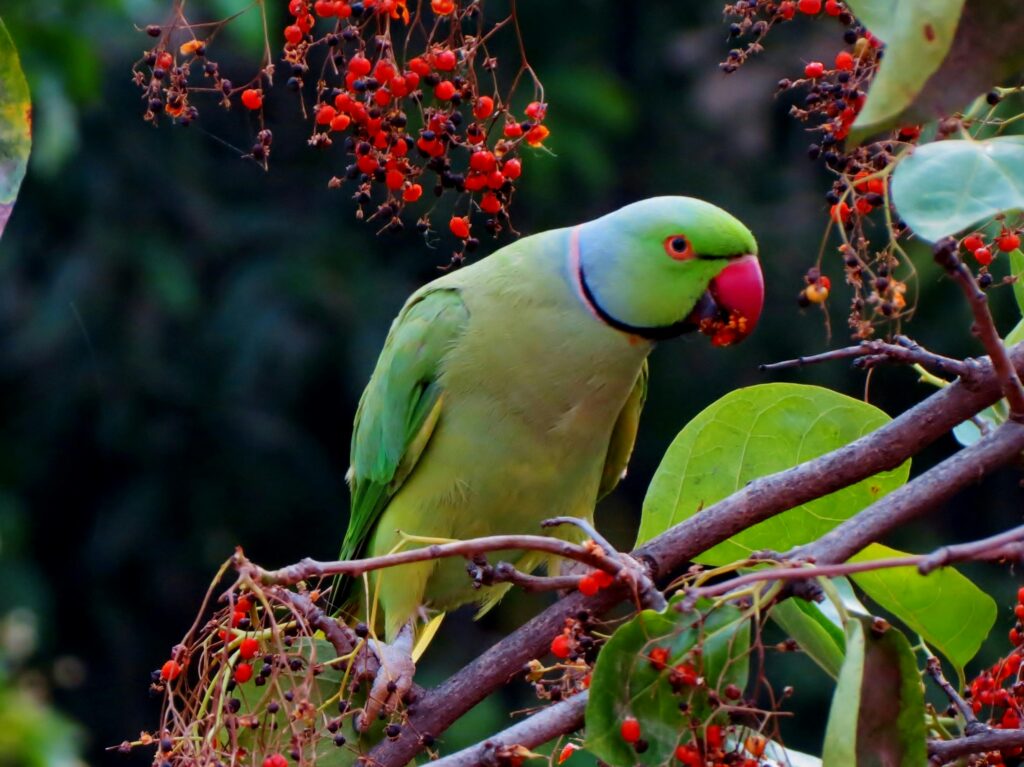
These birds frequently feed on fruits, seeds, and cultivated crops.
The Greater Coucal is a large and distinctive bird often seen moving slowly through bushes and dense vegetation.
Key features include:
➤ Glossy black head and body
➤ Rich chestnut brown wings
➤ Deep “coop-coop-coop” call
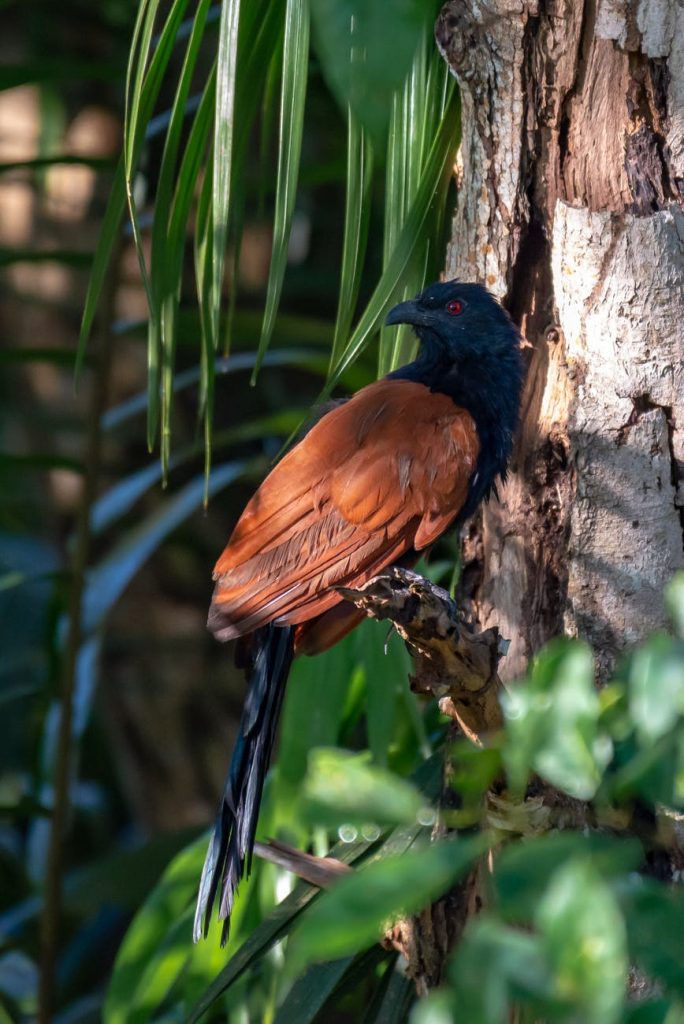
This species prefers thick vegetation and is often heard before it is seen.
The Indian Robin is a small but active bird that is commonly seen hopping along the ground in open habitats.
Key identification features include:
➤ Dark black body in males
➤ White shoulder patch
➤ Chestnut undertail visible during flight
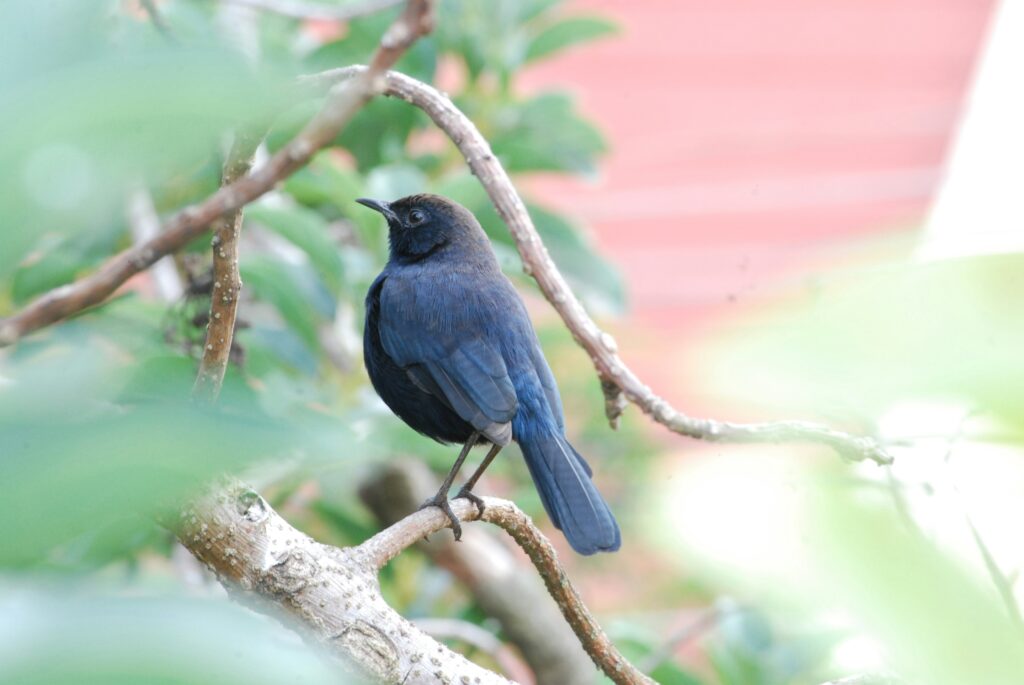
Indian Robins often perch on rocks or low branches while scanning their surroundings.
The Purple Sunbird is one of the smallest birds commonly seen in Indian gardens and forests. During the breeding season, the male bird appears glossy purple in sunlight.
Key features include:
➤ Small size and slender curved bill
➤ Rapid movement among flowers
➤ Metallic purple plumage in breeding males
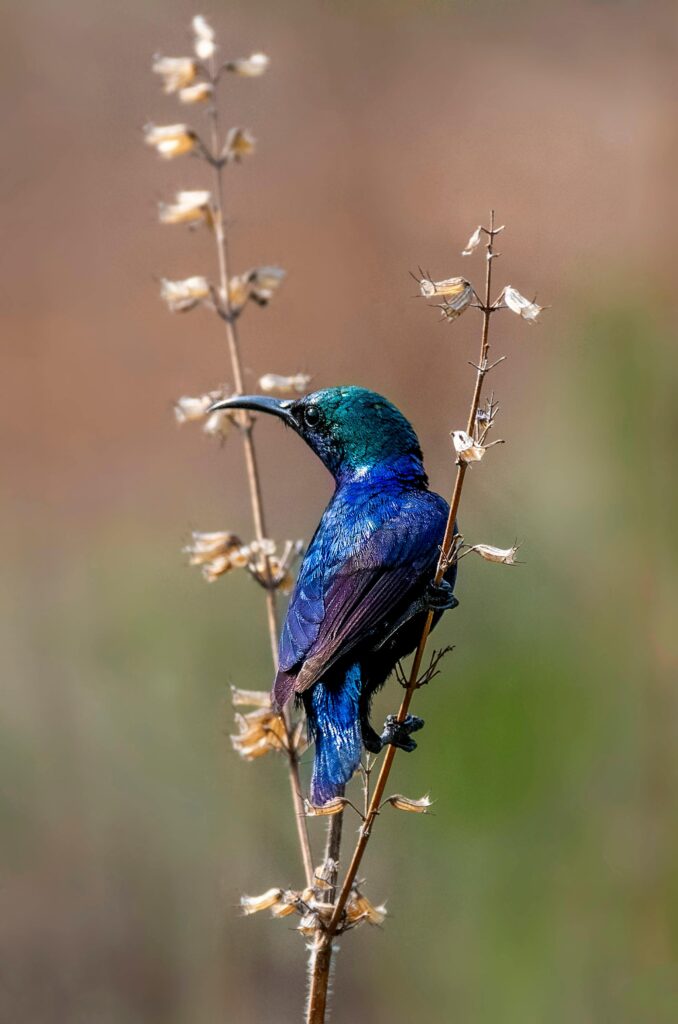
These birds feed on nectar and play an important role in pollinating flowering plants.
Enjoying this? Read more: Nature’s Greatest Teachers: Life Lessons We Learn from Birds
Learning Birdwatching Skills in the Field
Learning to identify birds becomes much easier when you observe them in natural habitats. Field experience helps beginners recognise bird calls, behaviour, and habitats more effectively than books or photos alone.
During guided birding walks, naturalists help participants understand:
➤ Bird calls and songs
➤ Feeding behaviour and flight patterns
➤ Habitat preferences of different species
➤ Seasonal bird movements
These skills gradually help beginners identify many more bird species with confidence.
Explore Guided Forest Walks with The Tern Travellers
Guided forest walks are one of the best ways to begin your birdwatching journey. Experienced naturalists help participants identify birds, trees, insects, and wildlife while explaining the fascinating ecological connections within forests.
Our forest walks and biodiversity trails are designed to help nature lovers explore wildlife while learning practical field skills used by naturalists.
Join us on our upcoming nature trails and experience the forest the way naturalists see it — full of life, stories, and hidden discoveries.
Still reading? Explore more: Beginner’s Guide to Birdwatching, Why Guided Nature Trails Reveal More Wildlife Than Regular Trekking, What You Can Learn on a Forest Walk